Running Sapient’s LA office opened my eyes to how challenging agencies are to run and how broken they can feel. So I went back to the research and built a model from first principles: reduce the chaos, raise productivity, make agencies places where people actually want to work. It worked the first time I tried it, which surprised me more than anyone. Over the next twenty or thirty agencies I refined it. Over the hundred after that, something else happened: the work became a conversation. Every leadership team I sat with taught me something the model hadn’t predicted, and the model got better because of it.
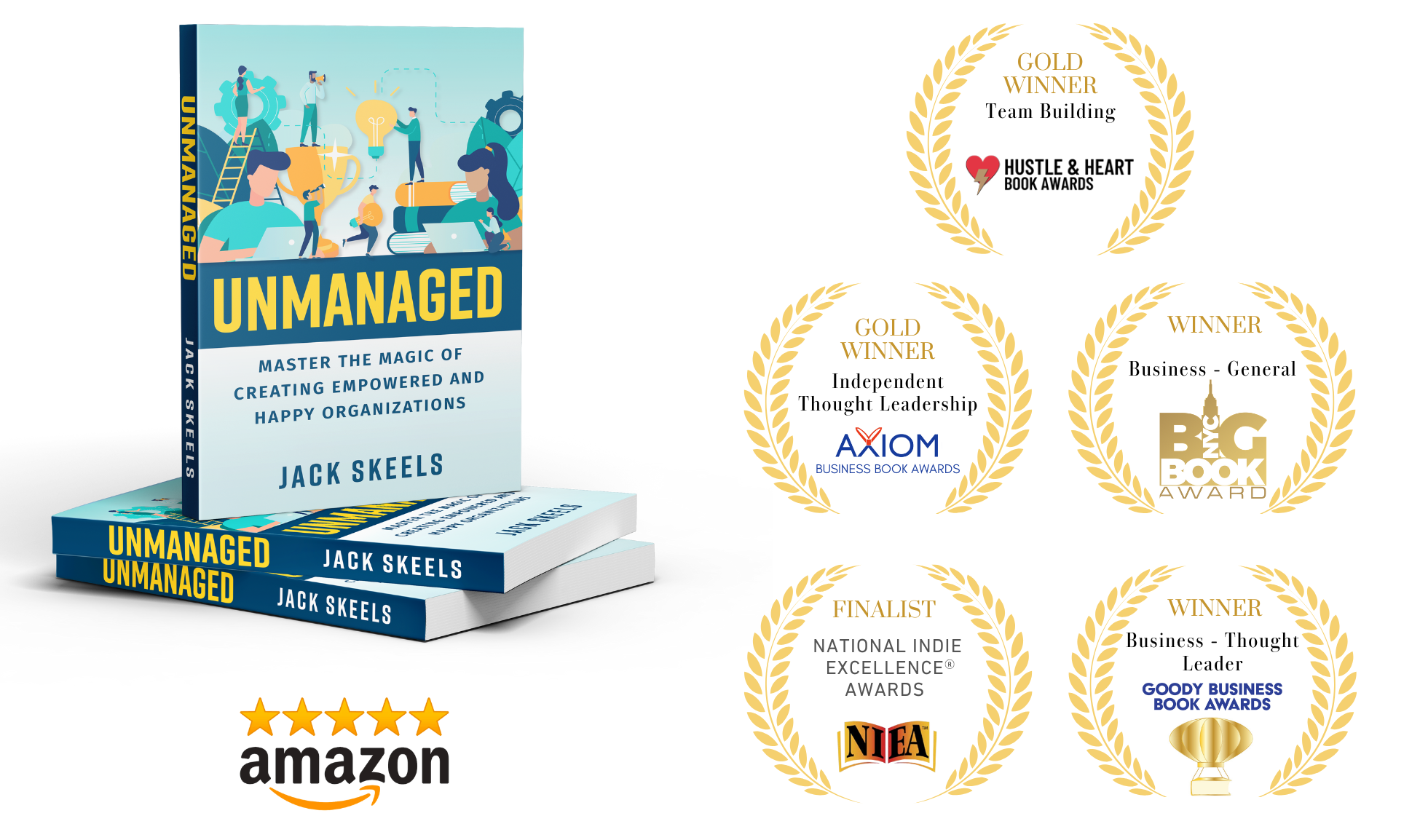
I founded AgencyAgile in 2011 to do something about what I kept seeing. Over 15 years we worked with more than 200 organizations, building and refining methods for how work actually flows. The core innovation was Workstream Pods: small, empowered, cross-functional teams replacing the department-siloed, waterfall model. Many organizations still run it a decade later, the outcome I’m proudest of. The work was published in MIT Sloan Management Review and was the foundation for my book UNMANAGED.
Better Company exists because of something I kept rediscovering: the work I love the most is working directly with the teams. As much as I tried to transfer the skills into other coaches, and at times with great success, almost all of the most remarkable work that happened inside AgencyAgile happened when I was in the room. I love it. It is the most rewarding experience I know. Better Company is how I do that work now, directly, with the leaders and teams who want it.
What I’m working on now is the question AI has put in front of every agency: what will clients still pay you for when a machine can do most of the work? What I’m seeing is two things: value the client can see, and deep expertise built on purpose. Helping leaders build both is most of what I do now.
“Jack has had the single biggest positive impact on my agency of any initiative I’ve ever tried. Revenue is up. Profit is up. Client satisfaction is up. Employee engagement is up. My happiness is up.”
Bret Starr, CEO, The Starr Conspiracy

- RAND Corporation management scientist and current adjunct researcher
- USC MBA, Entrepreneurial Studies
- Hudson Institute, leadership coaching
- Two-time Inc. 500 (PDIT, Modulant)
- MIT Sloan Management Review contributor
- UNMANAGED: six awards, five golds, including the Axiom Gold Medal
- 200+ agency engagements across 15 years
- Called “The Fixer” by Campaign US